D&D
D&D Spellcasting Guide: Spell Slots, Components, and Concentration
July 08, 2026

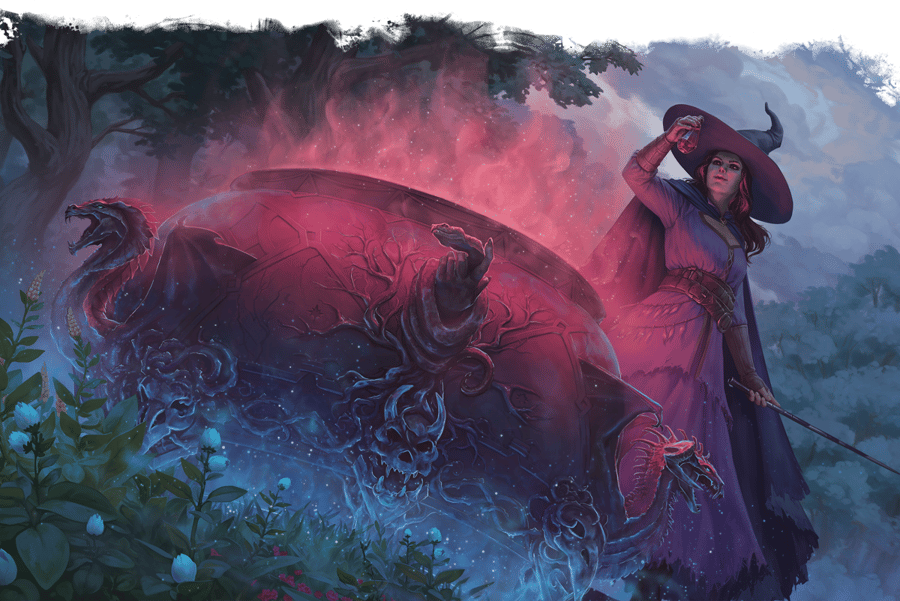
Spellcasters are often the most daunting classes for beginners, thanks to the literal book of spells, effects, and lore that comes with the work of Wizardry. Unfortunately, magic isn’t as simple as waving a wand and wishing a rabbit out of a hat. The path of a spellcaster is one that calls for resource management, battle sense, and a healthy amount of arcane expertise, so it’s understandable that the D&D novice might be turned away. But while spellcasters come with a bit more to learn, there’s really no denying that entering the world of the arcane is worth the investment. The ability ceiling of a Wizard is almost inconceivable, and if you play your cards right, you might just land yourself among the ranks of the Gods themselves. So hold on to your pointy hats, folks, ‘cause we’re learning how to cast spells!
 Spell Slots and Casting Tiers
The first thing to get clear when wandering into the world of magic is exactly how spell slots work. When you pop open the hood of magic in D&D, spell slots are what make up the engine. Without them, magic would go completely unchecked, and the world would plunge into mayhem as spellcasters drop fireballs like bombs and then reset the universe with a Wish spell at the top of every hour.
D&D’s magic system utilizes a spell slot “hierarchy” that exists to regulate the power level of spellcasters. Spell slots are split into “levels”, meaning as you progress through your leveling as a character, you’ll earn higher-level spell slots, ranging from level 1 to level 9. A clever mechanic designed to ensure higher-level spells can only be expended with higher-level spell slots.
Slot Economy
Understanding the hierarchy of the spell slot economy is crucial to learning how to sling spells. Let’s use a Level 8 Wizard as an example.
At Level 8, the Wizard gets 12 spell slots. At each character level, The Player's Handbook will indicate exactly how many spell slots and what spell slot levels you gain access to. At Level 8, the Wizard earns 4 Level 1 spell slots, 3 Level 2 spell slots, 3 Level 3 spell slots, and 2 Level 4 spell slots. You might notice that there are no Level 8 spell slots. That’s because spell level does not correlate with character level. The Wizard finally unlocks their first Level 8 spell slot at character level 15.
Let’s visualize the Level 8 Wizards' spell slots:
|
Lvl 1 |
Lvl 1 |
Lvl 1 |
Lvl 1 |
Lvl 2 |
Lvl 2 |
Lvl 2 |
Lvl 3 |
Lvl 3 |
Lvl 3 |
Lvl 4 |
Lvl 4 |
In practice, this means the Wizard can cast any level one spell(s) they have prepared up to 4 times, before they need to take a long rest and replenish. On the other end, the Wizard can similarly cast any level 4 spell(s) they have prepared up to a total of 2 times, before they need to take another long rest.
But there is more maneuverability here than meets the eye. One important rule to keep in mind is upcasting.
Upcasting
Imagine a scenario where a party of adventurers has been clearing a dungeon and are running out of resources. Our Wizard has no spell slots left except for one measly Level 3 spell slot, and unfortunately, the only spell they have prepared is a Level 1 spell, Burning Hands. Fortunately, the Wizard is not out of options. By Upcasting, the wizard can cast their level 1 spell (Burning Hands) using their level 3 spell slot, which in turn scales the damage and effectiveness of the spell to new heights.
Now don’t get any bright ideas. You can not cast higher-level spells by combining low-level spell slots. Upcasting only goes in one direction, meaning Level 3 spells can only be cast with Level 3 spell slots or higher.
Cantrips (Level 0)

Cantrips are the “always-ready, always reliable” spells of D&D. When all else fails, cantrips are there to offer spellcasters a trick up their sleeve that just might save their skin. Because cantrips are classified as “at-will”, they do not use spell slots, meaning they’ll be cast quite frequently by most spellcasters. Fortunately, cantrips scale with your level (e.g., a damage increase from 1d10 to 2d10 at level 5), so the stronger you get, the stronger your cantrips will get with you.
Important detail: Cantrips cannot be upcast. Because they do not occupy a slot, their scaling is tied to character level rather than slot expenditure.
Rituals
There is technically a way to cast certain spells without using any spell slots: Ritual Casting. By accepting a 10-minute casting time (as you draw sigils, light candles, and rifle through your arcane knowledge), a caster can bypass the slot cost of any spell with the “Ritual” tag. Ritual casting is a lifesaver when you need to cast a spell for utility purposes but don’t want to burn a slot for an upcoming combat encounter.
Recovering Spell Slots
For most classes, getting your spell slots back requires a long rest. After a full eight-hour reset, spell casters will replenish all of their spent spell slots. However, because Warlocks have fewer spell slots than other spell casters, they’re allowed to regain all of their Pact Magic slots during short rests, in order to provide a little more balance.
Subverting Spell Slots
The typical way of acquiring spells is through some sort of arcane study or pact, but the Forgotten Realms are inherently magical, meaning magic comes in more forms than just “spells”.
There are two ways to access the effects of magic spells, without actually doing any casting (or burning any spell slots):
- Species Traits: Certain lineages, such as Tieflings and Aasimar, possess inherent magical skills that do not rely on class levels.
- Magical Items: Magic items like the Wand of Magic Missile use “charges” in places of slots, allowing casters to expend up to 3 of the item's 7 charges at once, for a Magic Missile spell without any slot cost.
The Wizard's Book of Spells
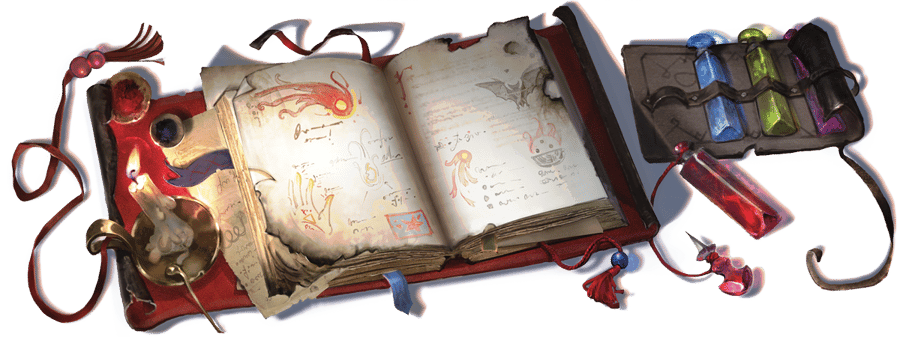
The Wizard gets the edge as the ultimate spell caster in D&D because of the classes near limitless spell list. Where other classes have a set list of spells that they know inherently, the Wizard is ultimately a caster with a spell book. Unlike the other classes, Wizards can truly learn spells using their spellbook as a repository for their acquired abilities. Where other classes have a hard limit on the number of spells they know, the wizard only has a limit on how many different spells they can prepare. Still, the Wizard must protect his spellbook with his life, because without it, the only spells he’ll be able to cast are the ones he prepared during his last long rest.
The 5 Parts of a Spell
What actually goes into a spell is important to keep in mind. Neglect a spell's components or casting time, and you might end up at a disadvantage. The best spellcasters know their spells like the back of their hand.
Schools of Magic

Every spell is categorized into one of eight schools of magic (e.g., Divination, Evocation, Necromancy). These are really just a way to organize spells, since one can technically acquire spells in any school, but they are handy for framing your character's specializations, and often align well with specific subclasses.
Casting Time
With only six seconds in a round, there are only a few actions a spell caster can take before the end of their turn. Most spells will have a casting time of at least one full Action, but some spells can be cast as Bonus Actions.
Reactions are spells that can be cast in response to certain triggers, such as interrupting an enemy spellcaster with a counter spell.
Range and Area of Effect (AoE)
A spell is defined by its range and its AoE geometry. For example, the range might be Self, Touch, or Ranged, and the AoE geometry might be a cone, a line, a sphere, or a cube. So a Fireball spell is a Ranged spell with a direct line AoE, meaning anything caught within the path of that line will get burnt.
Components
Components are the physical elements that bring a spell into reality, breaking down into three different types:
-
Verbal (V) and Somatic (S): Spoken incantations and hand gestures that act as real-time vulnerabilities when casting spells. Believe it or not, waving your arms around while shouting "arcane words" makes stealth or subtle manipulation nearly impossible without specific features.
-
Material (M): Physical objects that are consumed by the process of casting.
-
Focus/Pouch: Most standard materials can be bypassed with a spellcasting focus, which is a designated item chosen by a spellcaster that is used to focus and channel magical energy with more efficiency.
Fun Fact: Many material components are thematic jokes or puns, like Detect Thoughts copper piece, which is a play on “Penny for your thoughts”, or Minor Illusion, which calls for fleece to “Pull the wool over someone's eyes”.
Concentration and Duration

Concentration is important to understand, as it will often be your biggest limitation when it comes to actually casting spells. A caster can only maintain one Concentration spell at a time, and must maintain concentration for as long as the spell's duration. For example, a spell that only requires one action to cast won’t require any more concentration than the one round it takes to cast the spell. But a spell with lasting effects might require concentration for minutes or even hours, meaning the spell caster won’t be able to cast another spell during that time.
Example: Detect Magic
Detect Magic serves as an ideal technical example: it is a 1st-level Divination spell with a casting time of one Action. However, it also includes a Ritual tag, allowing the caster to change the invocation method from a "Slot Spend" to a "Time Spend". It also requires two components, V (Verbal) and S (Somatic), which means casting the spell requires the caster to be able to speak and move their body. The Duration requires Concentration for up to 10 minutes, which means if a caster wants to be able to detect magic for the full ten minutes, they’ll only be able to focus on maintaining that spell for the entire duration. Lastly, the Classes tag tells me that this spell is available to all spellcaster classes.
Take Your Spellbook Digital with Roll20
Welcome to the world of sorcery! You are now one step closer to mastering the arcane arts and only a few clicks away from rolling up your next spellcaster! Roll20’s character creator and digital character sheet tools make running your Wizards or Warlocks as simple as casting spells straight from your character sheet, while Roll20 handles the resource tracking on your behalf! Whether you're playing an Abjuration wizard juggling Lightning Blots and Fireballs, or a Necromancer with an army of undead minions, Roll20 makes spell casting so easy, you might say it works like magic.