
D&D
Gothic Horror in D&D
JUNE 16, 2026

The air feels thick and stagnant as you stumble through the overwhelming mist, unable to barely see what’s in front of you. But you can certainly feel something behind you. You walk faster through the endless sea of grey and find yourself bombarded with intense fragments of emotion; sadness, regret, betrayal, and anger the deeper you go. You forge ahead, willing your feet to move because you can feel the skin on the back of your neck prickling and you swear there’s something moving towards you. Closer, closer, closer.
Welcome to a horror campaign.

Gothic horror has found its footing in so many other types of media such as novels, movies, and music. Therefore, gothic horror and D&D? A perfect pairing. Gothic Horror is a genre that explores themes such as death, decay, and the supernatural. The settings and environments that the genre creates, acting as a thematic element as it seems to reflect the characters mental states; creating an atmosphere that permits their exploration of fear, insanity, and the thin veil that separates life and death. Within these macabre locations and areas, one can expect to find gruesome apparitions, creatures, and stories that give way to rich story telling and terrifying experiences.
Interested in stepping into this world? Let’s explore what you can expect to find in a gothic horror D&D campaign.
Location
As players and DMs know, location is everything in any campaign, but especially one of horror. Meeting an apparition in a sunny flower-filled field just doesn’t hit the same as meeting one in the depths of a cursed crypt. In gothic horror campaigns such as Curse of Strahd and in the Domains of Dread that make up Ravenloft (which will be open to further exploration in Ravenloft: The Horrors Within), the world is riddled with locations that are a perfect haunting ground for all sorts of monsters, creatures, and undead.
For example, if a player or a DM were to run a Strahd campaign or visit one of the Domains of Dread, they can expect to find many dark places, such as the oppressed village of Barovia. The inhabitants of this town are husks of their former selves because the village walks a line between life and death.
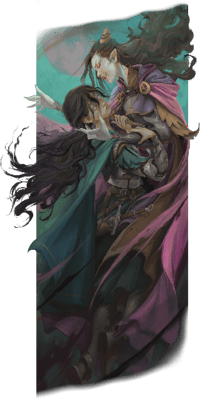
This is due to one in every ten of the inhabitants having souls. When those who have souls die in Barovia, their souls remain trapped within the domain and remain until they are reincarnated into a newborn. The rest who are soulless are husks, empty shells created by Strahd to bolster the population. The atmosphere within the city is bleak and grim, seeming to mirror the fate of its people.
Challenges
As any D&D player knows, locale is but one aspect of any campaign. The creatures, monsters, and other various entities also set the tone. Often in gothic horror, the characteristics of the evil entity or creature follow with the thematic elements found within gothic horror. Additionally, they can even help further the exploration into the elements mentioned previously, the exploration of fear, insanity, and the veil between life and death. Therefore, to the delight of DMs and the unease of players, expect visits from the undead or encounters with vampires, werewolves, hags, ghosts, or potentially encounter cursed objects.
One such cursed object that may find its way into a campaign is the Gulthias Staff, a rare item (found in Curse of Strahd) that a player could come across. This staff was constructed from the wood of the Gulthias tree (see the blights entry in the Monster Manual).
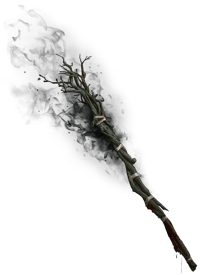 The Gulthias Staff is described as a spongy, black-length of wood. Its evil makes beasts visibly uncomfortable while within 30 feet of it. There are other benefits of the staff, but as a cursed object, there is of course a drawback.
The Staff has Vampiric Strike: The staff can be wielded as a magic quarterstaff. On a hit, it deals damage as a normal quarterstaff, and you can expend 1 charge to regain a number of hit points equal to the damage dealt by the weapon. Each time a charge is spent, red blood oozes from the staff’s pores, and you must succeed on a DC 12 wisdoms saving throw or be afflicted with short term madness (see “Madness” in the Dungeon Master’s Guide).

Gothic horror is a fun genre to explore, and even more fun to play in! However, be wary traveler as you make your way through the haunted houses or pass the “seemingly” silent cemeteries. In the world that is within the setting of gothic horror, nothing is truly what it seems, or maybe it is; only you can find out. Enjoy your time discovering the horrors within the unknown!
And, if you’re looking to delve further into gothic horror or horror in general remember Ravenloft: The Horrors Within is here!