
D&D
Guide to the Nine Hells in D&D: Layers, Devils, and Lore
July 06, 2026

In Dungeons and Dragons, few planes capture the imagination quite like the Nine Hells (Baator). According to Mordenkainen's Tome of Foes, the Nine Hells operate under a rigid bureaucratic hierarchy known as the hierarchy of the Hells, where each layer is ruled by an Archduke who answers directly to the supreme lord Asmodeus.
Physically, the Hells descend in a straight line of escalating severity. The journey begins at Avernus, a blasted, blood-red wasteland closest to the Material Plane and the primary front of the ongoing Blood War. From there, each layer plunges deeper: past the frozen wastes and scalding cities, through increasingly alien and hostile environments, until reaching Nessus, the ninth and deepest layer. The deeper you go, the more absolute the evil becomes. Descending into the Nine Hells is to come face to face with the true meaning of torture. A pain so deep that by the time you reach the ninth layer, you’ll be wishing you never left Avernus.
Layer 1: Avernus.png?width=250&height=250&name=max%20(63).png)
Avernus is the front door to Hell. It is, in comparison to the other layers of hell, the most familiar when compared to the Prime Material Plane, and even still, it is a tortured and agonizing realm. Avernus is characterized by jagged obsidian plains and blood-red soil, marked by craters and the wreckage of war and chaos.
Zariel: The Archduchess of Avernus, Zariel, is a fallen celestial, driven to obsession and madness. Of the many rulers of the Nine Hells, Zariel is the most overt with her tyranny, forgoing the schemes and manipulations of her brethren in exchange for pure martial dominance. Zariel is first and foremost a warrior, and she rules her realm as such, with generals, lieutenants, and casualties of war, including you and your party.
Layer 2 and 3: Dis and Minauros
The worst part of the Nine Hells is the way it makes you think you have a chance. Once you’ve escaped Avernus, you’ll descend deeper into the layers of Hell, at first emerging into a realm that might feel like a welcome respite from the wastelands above. As you stumble into Dis, the Iron City, you may be comforted by the sight of civilization, but what lies within is much, much worse than the horrors of Avernus.
Dis.png?width=250&height=250&name=max%20(60).png)
Dis is an endless sprawl of iron towers, fortified districts, and threatening obsidian watchtowers. Within the Iron City, the Forgotten Realms' most twisted schemers draft infernal contracts, exchange and dispatch spies, and pull the strings of politics to manipulate adventurers and lost souls into a lifetime of endless pain. In Dis, the best form of torture is the kind that actually lets you hit something.
Dispater: Dispater, the paranoid Archduke of the second layer, has spent eons building and rebuilding his iron metropolis into something that mirrors a corrupt mortal city taken to its logical extreme. Dispater himself rarely leaves his Iron Tower, ruling through intermediaries and tiered bureaucracies designed to ensure no single devil ever gains enough power to threaten him.
Minauros
The third layer of Hell is a perpetually stinking bog, overrun by acidic, refuse-choked swamp water. Here, the Nine layers of Hell quickly begin to lose the sense of “familiarity” that the top two layers possess. Unlike Dis, the cities of Minauros are inundated by the eternal miasma of its bog, making them grotesque approximations of civilization rather than functional societies.
Mammon: Mammon is Hell’s treasurer, tasked with governing the third layer of hell from the sanctity of his palace. Emblematic of the horror of bureaucracy, Minauros is a layer defined by slow decay, built upon unstable ground that gradually descends into bottomless muck.
Level 4 and 5: Phlegethos and Stygia
The middle layers of Baator represent Hell’s most extreme environments: the first, a roaring furnace, while the other, a frozen prison.
Phlegethos
Phlegethos is the fiery judicial heart of Baator, a layer of cascading magma flows, acidic rain, and volcanic plains stretching to every horizon. Phlegethos is the domain of the Diabolical Court, a formalized legal structure in which devils prosecute sinners, adjudicate infernal contracts, and dispense punishment. Unlike many of the other layers of hell, Phlegethos provides the opportunity for a uniquely roleplay-forward form of torture, requiring adventurers to argue their cases in hopes of securing their freedom.
Belial and Fierna: Phlegethos is ruled jointly by Belial and Fierna, father and daughter, whose partnership is as calculated as the infernal courts they preside over.
Stygia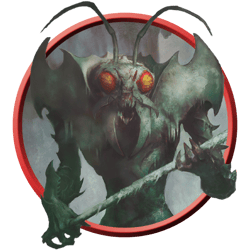
Stygia, the fifth layer, is the structural opposite of Phlegethos. A frozen, lightless wasteland locked beneath a sea of ancient ice. If it isn’t the outright torture that kills your party, it’ll be the stacking exhaustion levels from the endless cold that will take you out.
Levistus: From Stygia, the traitor Levistus rules from within his eternal prison. At the center of Stygia stands a massive glacier, which houses Levistus, cursed to a life as an Archduke of hell after directly betraying Asmodeus.
Level 6 and 7: Malbolge and Maladomini
The sixth and seventh layers of Baator represent a unique duality: the difference between Asmodeus’ favored servants and those who have earned his wrath.
Malbolge
Malboge was once a brutal series of mountain passes and cascading boulders, but under its ruler's influence, it has become an entirely new realm designed solely for cruelty and punishment. Now, Malboge is a strange, prison-like garden and a landscape of grotesque beauty wrapped around a tortured core.
Glasya: Malbolge is ruled by Glasya, the cunning daughter of Asmodeus, because even in hell, you can’t escape the Nepo-Babies. Glasya is an intelligent and politically cunning Archduke of Baator, often corralling the other demons and even Archdukes into working in her favor. From Malbolge, she runs a complex network of spies and informants who keep her and Asmodeus informed about the goings-on of the Nine Hells.
Maladomini.png?width=250&height=250&name=max%20(61).png)
The seventh layer of Hell is a realm of ruined cities and rubble. Maldomoni is the cursed depiction of society's failure, abandoned attempts at civilizing, and the remnants of good. This is the truest of the “wastelands” of hells, each dotted with half-finished towers and crumbling archives.
Baalzebul: A once magnificent archdevil, now cursed into a monstrous slug-like form after betraying Asmodeus. Baalzebul rules his realm with a bureaucratic fist and is noted for his obsession with documentation. His realm is littered with abandoned contracts, lost letters confessing guilt, and logs of the Archduke’s activities.
Pro Tip - Managing Maladomini's Paperwork: Use Roll20's digital handout tools to simulate Baalzebul's infernal archives with partially redacted documents and the scrawlings of a madman dropped into your campaign as player handouts.
Level 8 and 9: Cania and Nessus
These are the final layers of Hell, and if you’re lucky, realms which will prove too distant to reach. For most parties, Cania and Nessus are virtually untouchable, and for the rest, they’ll wish they’d never made it this far.
Cania
Cania is a frozen wasteland of shrieking blizzards and temperatures cold enough to kill unprotected mortals in seconds, yet hidden within that ice are vast arcane laboratories that house magical secrets that would make even the most dedicated wizard weep with envy. Cania is the realm of experimentation, where new forms of torture are devised and tested, before being released into the larger hells, and even the Forgotten Realms themselves.
Mephistopheles: Mephistopheles is one of the most dangerous intellectuals in the multiverse. So prominent that his reach extends beyond the fabric of Dungeons & Dragons cosmology and into the world of our own. According to the Lords of the Nine Hells lore, Mephistopheles is consumed by two obsessions: surpassing Asmodeus and perfecting the art of hellfire. Short of Asmodeus, no Archduke of hell is as consumed by the potential to be truly evil as Mephistopheles, and the moment Asmodeus retires, Mephistopheles will be there to succeed him.
Nessus .png?width=250&height=250&name=max%20(62).png)
The Ninth and final layer is home to the most horrible of Hell’s rulers: Asmodeus himself. As confirmed in the Player’s Handbook, Nessus is the lowest layer of the Nine Hells, where Asmodeus resides in a colossal fortress known as Malsheem. The layer is a realm of impossibly deep canyons, their floors permanently shrouded in darkness, as though the land were trying to swallow the sky. Nothing reaches Nessus by accident.
Asmodeus: Asmodeus is the architect of the entire infernal system, including the contracts that bind mortals to Baator across lifetimes. The rules of the Hells exist because he wrote them, and he's the only being in the multiverse who fully understands their loopholes.
Asmodeus takes many forms, including that of a handsome and charismatic red-skinned devil, but his true form is that of a scaled serpent hundreds of miles long. He is a terrifying sight to behold and the embodiment of lawful evil in every sense of the term. Despite his sadistic nature, Asmodeus maintains that his motivation is to uphold the law and the balance of good and evil; however, his cruel behavior and clever manipulations suggest there might be more satisfaction in it than he lets on.
Related Resources and Further Reading
The Nine Hells is a well-researched and well-covered topic within Dungeons & Dragons, with lore covering centuries of published history. Looking at the Roll20 Marketplace as a place to start? Baldur’s Gate: Descent Into Avernus is an excellent adventure set in Avernus, the first layer of the Nine Hells, and is technically the narrative sequel to Larian’s Baldur’s Gate 3. For more information on the Blood War and the Lower Planes, pick up Mordenkainen’s Tome of Foes, which expands on the entire cosmology of the Nine Hells.
Ready to run your infernal campaign? Set up your Roll20 session, load your devil stat blocks from the compendium, and let Baator's hierarchy do the storytelling.