D&D
How to Build Balanced D&D Encounters
JULY 04, 2026

Every DM has done it at least once. You design what seems like a reasonable fight, and it's over in two rounds. Or it drags on for forty-five minutes. Or you end up with an accidental TPK.
Imbalanced combat is a rite of passage for Dungeon Masters.
Encounter balance is one of the DM community's most discussed topics for a reason. It takes practice, but there's an assortment of tools and tricks that can help flatten the learning curve. This guide gives you what you need to start building encounters that feel challenging, dynamic, and fun.
Start With the Story, Not the Stat Block
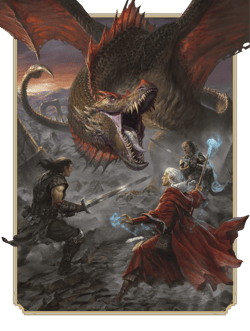
Story-first encounter design ties the adventure’s arc and the characters’ development together with the D&D combat mechanics people love. Encounters that exist purely as combat obstacles can feel like filler, no matter how mechanically balanced they are.
Always pick your enemies to fit the story. You can sort out the math later.
Understanding Challenge Rating
Challenge Rating (CR) is D&D's official scale of monster difficulty. A CR 1 creature is designed for a party of four level-1 characters; CR 5 for a party of four level-5 characters. It's a solid starting point for planning encounters.
The most common mistake new DMs make is treating CR as a precise difficulty dial. CR measures how draining a single creature is against a single party of a specific size and level, under specific assumptions about encounter frequency. It can often oversimplify combat. Change any variable and the math of the encounter can shift.
The 2024 Dungeon Master's Guide (DMG) on Roll20 includes a simplified encounter-building system that's more intuitive than the 2014 version. If you're working from the updated rules, the XP budget method is more reliable and easier to use at the table.
Action Economy: The Real Driver of Difficulty
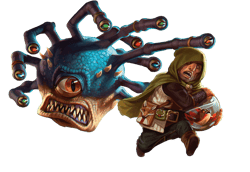 If there's one concept that changes how you think about encounter balance, it's action economy.
Every creature gets actions: attacks, spells, movement, bonus actions. The total actions available to monsters versus those available to the party is the true measure of how difficult a fight will be.
This is why a single high-CR monster often feels easier than expected. The party gets four or five turns for every one the monster gets. Even a powerful solo creature operates at a severe action disadvantage unless it has legendary or lair actions to compensate. It's also why a large group of low-CR monsters can surprise you with their lethality. Six goblins -- each with a CR 1/4 -- collectively have six attacks per round. Against a party of four level-1 characters, that's a genuinely dangerous fight, even though the math on paper suggests otherwise.
Rule of thumb: when in doubt, fewer high-quality monsters produces more manageable encounters. More monsters means more turns to track, more chaos, and more ways for difficulty to spike unexpectedly.
The Adventuring Day
The DMG's most overlooked section is the adventuring day. The game’s design assumption is that a party will face roughly six to eight medium or hard encounters before taking a long rest.
D&D's balance is built around resource attrition. Spell slots, hit points, class abilities -- players are meant to spend these gradually across multiple encounters. One or two big fights per session means players arrive at each one at full strength, and the encounters feel trivial. Five or six challenges in a row means even easy encounters feel meaningful, because every resource spent counts.
You don't need six combat encounters every session. But keeping the adventuring day in mind – mixing social encounters, exploration challenges, and smaller skirmishes alongside major set pieces – gives your design better context and makes your big fights land harder.
Mixing Difficulties
Not every encounter needs to be a climactic battle. A well-designed session uses varying levels of difficulty to keep things interesting and sustainable.
Easy encounters let players feel capable and spend resources freely. Medium encounters create real tension without threatening survival. Hard encounters are where memorable moments happen. Deadly encounters should be rare – the kind of fight where players genuinely aren't sure everyone makes it out.
Mixing these deliberately across a session -- or across an adventuring day -- keeps the energy dynamic. A hard encounter hits differently when the party used a spell slot on the easy skirmish an hour earlier.
Terrain and Environment
A group of five goblins present wildly different encounters depending on where you put them.
Goblins on an open road are a nuisance. Goblins in a canyon with archers on the high ground, oil barrels to ignite, and a rope bridge the players need to cross can create a memorable – and potentially challenging – encounter. Terrain transforms encounter design without changing anything about a stat block. When choosing where to place an encounter, consider:
- Cover and high ground. Does either side have a positional advantage? Can players use the environment to their benefit, or only the monsters?
- Obstacles and chokepoints. Narrow corridors, locked doors, and difficult terrain change how movement works and how quickly a fight resolves.
- Environmental hazards. Collapsing ceilings, poisoned water, fire spreading across the floor, etc. can threaten both sides, and can force player decisions in different directions.
- Objectives beyond "kill everything." The most unique encounters often have a goal beyond “just” killing everything. Consider goals like protecting the NPC, holding the bridge for three rounds, retrieving the artifact before the room floods. Having a less straightforward, more story-driven goal creates additional room for story and a different type of challenge than simply winning a battle.
Key Takeaways for New Dungeon Masters
Here are the important things to keep in mind as you begin building:
- Start with monsters that fit the story
- Remember that the math is meant to be directional
- Double-check that their combined CR doesn't dramatically exceed your party's average level
- Add one or two environmental details that will likely impact combat tactics
- Give the encounter a clear goal – bonus points if it goes deeper than “just” killing monsters
Once you’ve built the encounter out and weighed the numbers, the only thing left to do is run it. Then maybe run it again. Many new DMs run the same adventure multiple times to see how different choices play out mechanically.
Every table is different. DMG tools and community resources are helpful, but experience will be your most valuable resource. The most reliable way to develop a feel for difficulty is to run encounters, pay attention, and put in the reps.
Additional Resources
- 2024 Dungeon Master's Guide on Roll20
- D&D Monster Manual on Roll20
- How to Run a Boss Fight
- How to Set Traps in D&D
- Roll20 Community Forums