
D&D
Human Species Guide in D&D: Traits, Lore, and Roleplay Tips
MAR 26, 2026

The world of Toril is full of fascinating creatures, each equipped with innate powers and abilities that allow them to achieve impressive feats, from seeing in the dark to soaring through the skies. The species of Toril offer incredible variety in their abilities, with tricks up their sleeves that appeal to new and veteran D&D fans alike. And yet, you might be surprised to learn which of D&D's species is consistently the most popular pick across each edition: the human.
If you haven't played a human yet, it may be time for you to give D&D's most popular species a chance. Don't worry, humans aren't as scary as they seem. In fact, they're pretty pleasant once you get to know them. Humans are everywhere and make up a huge part of Faerûn's population. Not because they're the 'default' species, but because of the many species of Toril, humans are by far the most ambitious, unbound, and versatile species that Dungeons and Dragons has to offer.
 Humans Are Everywhere
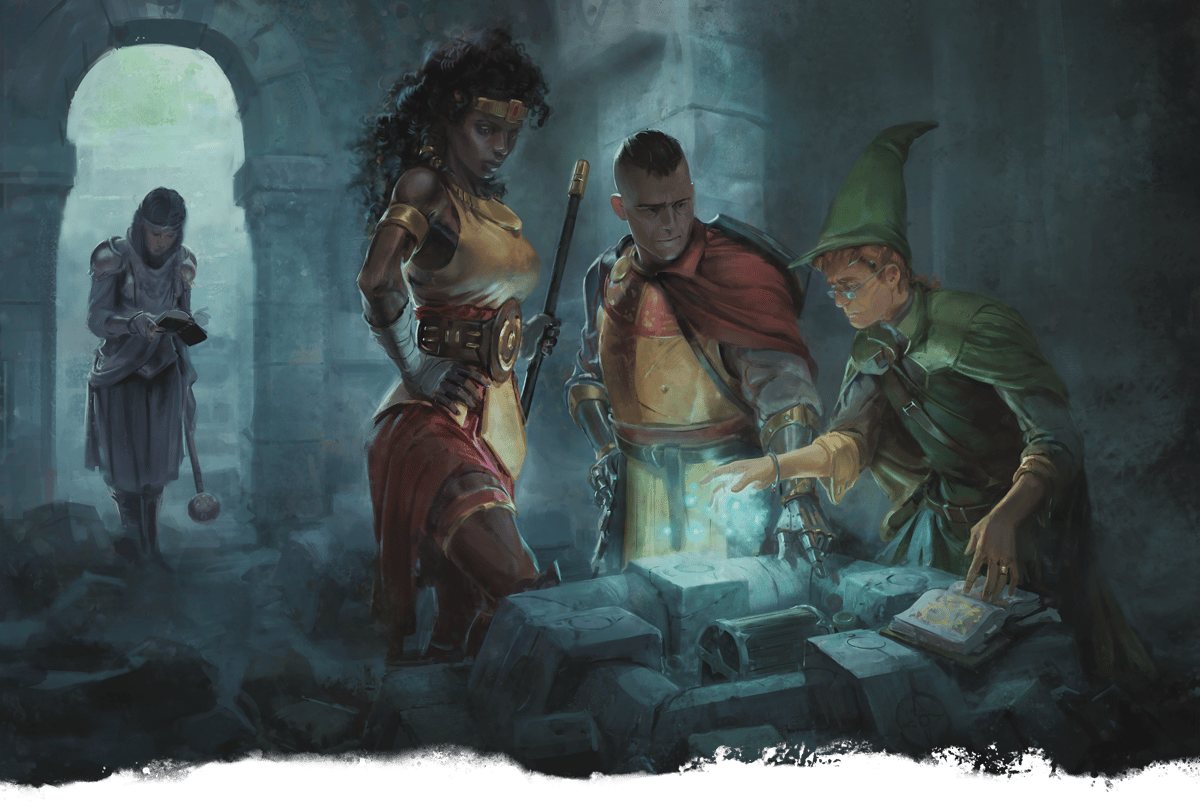
Those who tend to avoid humans as their chosen species often see it as settling for a baseline, and thanks to human prominence throughout Faerûn, this isn't necessarily untrue. Humans are spread far and wide, and they are at the center of many of Faerûn's most recognized cities and settlements, but it's this prominence that is one of the defining appeals of the human species. The truth behind human popularity is simple: humans can be anything and anyone.
Unlike most other species, humans are less tied to a singular cultural identity or belief system. They occupy every corner of Toril, and much like our earth, some humans will go their entire lifetimes without ever laying eyes on another human from outside their culture. This, combined with the fact that they are one of the most widespread species, makes the humans of Dungeons & Dragons incredibly diverse in beliefs, perspectives, and abilities. Rather than seeing humans as one-note or generic, embrace what they really are. Boundless potential to play any role, any class, any build, and any story.
Understanding The Human Species
In the realms of Dungeons & Dragons, humans are the most numerous and arguably the most influential species. From the perspective of the other species of Faerûn, the humans, ironically, are quite alien. Where Elves, Dwarves, Orcs, etc., are generally tied to strong spiritual and traditional principles and beliefs, the human species is too vast and too ambitious to be limited by any set code or creed. Instead, humans consistently adapt and evolve, assimilating into other societies or reclaiming them as their own. Where an Orcish army might ransack your city, or an Elven army might use it to stage a great summoning ritual, a human army will reduce your city to rubble just to rebuild it in their vision.
On the other hand, where an Elven envoy or an Orcish emissary may find themselves deterred by the customs of other cultures, humans are highly adept at assimilation, furthering their reach and influence across Toril. There's a reason half-orcs and half-elves tend to be half-human… While there aren't any official numbers on human demographics, materials in past releases, and references in some modern texts are clear on one thing: humans dominate both on the map and in headcount. Roughly estimating, fans have concluded that humans make up anywhere from 70%-80% of Faerûn's population, which might make you reevaluate the realism of that “all Tieflings” party your table always plays.
What truly makes the truth of human dominance so impressive is the somewhat chilling fact that humans are the youngest species on Toril. When you factor in the average lifespans of the other species, it's easy to see why humans represent such a threat as the fastest-expanding species to date.
The History Of Humans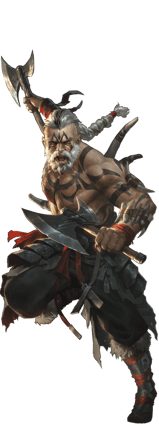
Humans maintain their oddly "alien" presence in D&D as one of the few species without an official backstory. While other species, like the Drow, have singular creation myths, human history is much harder to trace back to a single, defined origin. Whether this is due to origin stories being proposed and then decanonized over time remains unclear, but across all iterations of human history in D&D, the species began as a tribal, nomadic people native to Toril.
Broadly, human history points to an origin on the continent that would later be known as Katashaka. Allegedly, humans lived in tribal cultures, using simple tools and fire long before they evolved into the city-builders of the modern era. The early tribes of Katashaka were the progenitors of the later Chultan human tribes, who are tall, athletic, and have brown skin, suggesting that these traits were common among early humans.
From there, humans continued in the same manner as they had thus far. Spreading out and developing independently from one another, populating multiple regions and continents. At least, according to most. Even today, some believe that humans originate from other worlds or planes, while others believe humans are the creation of the god Chauntea. Of all the species of Toril, humans hold the most unclear origins, making them yet again, one of D&D's most unique species.
How Humans Excel In 5.5E
One of the biggest contributors to human popularity is the raw mechanical appeal. For build synergy, humans are a cut above the rest thanks to three key features: Resourceful, Skillful, and Versatile. Each of these features provides benefits that give humans a massive power spike right out of the gate. When it comes to bringing a build online, humans are easily the best choice to see the advantages of your playstyle demonstrated early. So what exactly makes these features so impressive?
Resourceful: You gain Heroic Inspiration whenever you finish a Long Rest.
Resourceful is an incredibly helpful ability to have in your toolbelt, essentially giving you one free re-roll once per day.
Skillful: You gain proficiency in one skill of your choice.
Even at level 1, humans stand out amongst the rest with an extra skill proficiency, for a total of three skill proficiencies from day one.
Versatile: You gain an Origin feat of your choice.
The importance of this feature can not be overstated. An extra origin feat at level one gives human characters a major edge over others. Rather than waiting to level up to pick up Tavern Brawler, or whatever cornerstone feature you're waiting on, humans are able to enjoy these abilities from the very start.
Acting Like A Human
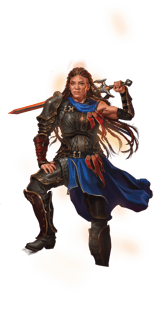 Humans occupy a unique space in the roleplay framework of D&D. While the greatest churches, academies, and governments are made up of humans, they are not a species defined by ancient prophecies or inherent magical bloodlines. Humans are the sum of their lived experiences, triumphs, and failures. Some are aggressive, and some are peaceful. Some are wise, and some are naive. But one thing is constant amongst all humans: the constant pursuit of more. Whether it's knowledge, wealth, piety, or power, humans are motivated by ambition. When you're rolling up a human character, make sure to identify what they want most, and let your desire guide you.
Because humans are less tied to overarching beliefs, choosing a background can often be the best way to inform your character. Humans can be Artisans, Guards, Sailors, Nobility, or anything in between. Whatever their station in life, allow it to inform your human character in their roleplay.
Human Cultures
An important factor to consider when roleplaying a human is their ethnicity and culture. The human species is not monolithic. Throughout Faerûn and other D&D settings, diverse human ethnicities and cultures have evolved, each with their own unique traditions, beliefs, and societal structures. From the seafaring traders of the Sword Coast to the hardy mountain clans of the Spine of the World, these variations offer a wealth of roleplaying opportunities. A character from a nomadic desert tribe might possess unique survival skills and a deep understanding of the stars, while a noble from a sprawling metropolis might be adept in courtly intrigue and political maneuvering. These cultural nuances should influence a character's motivations, their interactions with others, and even their specialized skills.
There are more human cultures in Toril than are fit to print, but for all of the humans of our earth, there is a direct equivalent in D&D. Search for inspiration in our real world, explore the history and tactics of different cultures, and allow that to be the template for which you design your unique human. In D&D, humans can resemble anything from samurai to cowboys.
The Underrated Power Of The Human Species
Contrary to the humans of Earth, the human species in Dungeons & Dragons is anything but ordinary. Where elves offer grace and mysticism, orcs offer strength and power, and gnomes offer intellect and dexterity, humans stand out above the rest for their unmatched adaptability, ambition, and versatility. They may not come with the grab bag of tricks that the other species possess, but they do offer boundless potential. In D&D, humans aren’t the ‘standard’ species that they are on Earth. Instead, the humans of D&D function as a fantasy archetype of their own with far more to offer beyond what appears on the surface.