
D&D
How Magic: The Gathering Built the Foundation for D&D's Universes Beyond
October 10, 2026

If you've followed Magic: The Gathering in recent years, you're already aware of the universes that lie beyond, and similarly, you're probably familiar with the way the multiverse serves as a driving engine behind your favorite game. In 2021, Wizards of the Coast introduced Universes Beyond to bring outside franchises into Magic's card game, like Warhammer 40,000, The Lord of the Rings, and Doctor Who, to name a few. The product line has since created some of the best-selling decks the game has ever produced and has even introduced many of these universes to Magic fans for the very first time.
Finally, D&D players can embrace the multiverse much like Magic fans before them. At Gen Con 2026, Wizards confirmed what many fans suspected: D&D is adopting the same multiversal model, kicking it off with none other than one of the most beloved fantasy realms in RPG history: World of Warcraft.
While the first crossover in the Universes Beyond line will go to World of Warcraft, Azeroth comes to us by way of the groundwork laid by Magic: The Gathering. That means if we want to see where D&D’s multiverse is headed next, we need to look more closely at how Magic forged the path.
Are Magic: The Gathering and D&D Actually Related?
Magic: The Gathering and Dungeons & Dragons share a parent company in Wizards of the Coast, but for most of their shared history, the two existed as separate creative universes with no official crossover.
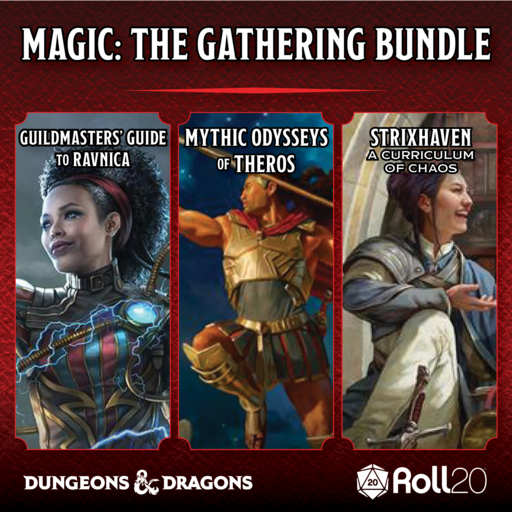
However, that changed gradually as the two universes began to flirt with the idea of a larger exchange, with Magic making the first move. In 2017, designer James Wyatt released supplemental rules to adapt individual Magic planes into 5e D&D in a series of digital releases called “Plane Shift”. In retrospect, those releases were really just a test run for the full retail push that followed. In 2018, Wizards began releasing full retail Magic sourcebooks: Guildmasters' Guide to Ravnica, followed by Mythic Odysseys of Theros in 2020 and Strixhaven: A Curriculum of Chaos in 2021. Each one took a Magic plane and gave it the full D&D treatment, with new species, subclasses, monsters, and ready-to-run adventures.
In response, Magic returned the favor on its own side of the table, releasing card sets like Adventures in the Forgotten Realms and later Commander Legends: Battle for Baldur's Gate, pulling classic D&D settings and characters into Magic's card frame.
This period marked a string of one-off collaborations between Magic and D&D, but they were still mostly supplemental materials. Universes Beyond is an entirely different animal: a full-scale initiative with an ongoing release schedule, rather than an occasional event. Still, for Magic fans, it’s little more than a reminder of Wizards’ flexible approach to bending the multiverse into new shapes, which is exactly the kind of flexibility Universes Beyond depends on.
How Universes Beyond Promises to Change the D&D Multiverse
The multiverse has been part of D&D's DNA since long before Universes Beyond entered the picture. The Forgotten Realms, Eberron, Ravenloft, Spelljammer, and dozens of other settings have always coexisted as parallel worlds, connected by planar travel, the Astral Sea, and the strange physics that let a party step from one cosmology into another without breaking the laws of time and space. In fact, the first Magic supplements James Wyatt released acknowledge D&D’s preexisting multiversal structure, with the title an homage to the reality-bending wizard spell “Plane Shift.”
Universes Beyond introduces anchor points that reimagine how far the idea of the multiverse can stretch, allowing tables to lean more deliberately into that concept. More than a crossover product line, Universes Beyond officially confirms D&D as a multiversal engine designed to be pushed to its limits. Instead of treating outside worlds as a novelty the DM has to justify with an off-handed line of hand-wavy exposition, Universes Beyond sets a new precedent for hopping planes, whether officially licensed or entirely homebrew. It’s a reexamination of the engine that powers D&D, and its applicability across countless worlds and realities. With Universes Beyond, Wizards confirms that the multiverse was always big enough to provide anything a table could ever want, even if what they want comes in the form of a lightsaber.
Star Wars and World of Warcraft Enter the Multiverse
D&D: World of Warcraft, the first Universes Beyond release, is the clearest sign yet of how far this scale can go. Due out Nov. 17, the 256-page book brings all 13 WoW classes and more than 40 specializations to the table, alongside 11 new playable species, six new subclasses, plus 60 new spells, 26 magic items, and roughly 30 "dungeon boss" stat blocks pulled from two decades of Azeroth's most iconic villains, including the Lich King himself. But Azeroth is a fantasy realm, with elements familiar to even the newest D&D player. The true extent of the multiversal margins is tested in the second announced release: D&D x Star Wars.
For some, Star Wars is the more tantalizing prospect of the two, if only because Wizards has said almost nothing concrete about it yet. All that’s confirmed so far is a 2027 launch, somewhere under the “Season of Rebellion” banner, but we can start piecing the rest together by looking at past crossovers. Still, we can infer something about the game's nature from its placement on the roadmap. On March 3rd, WotC debuted D&D’s seasonal roadmap, an outline of upcoming releases and what to expect. Most notably, the seasonal roadmap provides a thematic guide to D&D, as Wizards puts the attention on various pillars that make the game what it is. The recently released “Arcana: Unleashed” focuses on the very concept of magic itself in the world of Faerûn, offering character options, spells, and adventures that speak to D&D’s magical themes, in line with the ongoing Season of Magic. Following this model, the Season of Rebellion makes perfect sense for Star Wars, as a universe defined by politics, faction tensions, and a healthy dose of rebellion. Little is confirmed about a D&D and Star Wars crossover beyond the seasonal framing, but the Season of Rebellion points pretty clearly toward the conflict between the Empire and the Rebellion as the likely focus.
Star Wars has never quite had a definitive tabletop RPG the way Warcraft or Middle-earth have; Wizards itself published a d20-based Star Wars line in the early 2000s, and Fantasy Flight Games later built a well-regarded narrative-dice system between Edge of the Empire, Age of Rebellion, and Force and Destiny, but none of these became the singular way fans experience that galaxy the way 5e has for fantasy. A D&D-native Star Wars book has the chance to fill that gap for those of us who already know 5e's rules and would rather build a smuggler or a Force-sensitive outcast without learning an entirely new system first.
Harnessing the Power of the Multiverse on Roll20
Whatever settings Universes Beyond eventually covers, Roll20's tools make it straightforward to bring outside worlds to your table today, official sourcebook or not. Custom character sheets, compendium entries, handouts, and token art all let you build a setting piece by piece, and previous Magic crossovers are already there to demonstrate how the multiverse works in D&D. If you’re eager to start plane shifting, take a look at these beloved adventures that take place outside of Faerûn.
- Guildmasters' Guide to Ravnica: Set in the world of Magic, Guildmasters' Guide to Ravnica takes players to the sprawling, complex city of Ravnica, where various guilds vie for power through back-alley negotiations, crime, and political influence.
- Mythic Odysseys of Theros: This book takes players straight to the pantheon of Magic, known as Theros. Here, players will confront and cavort with a cast of gods inspired by the Greek pantheon in exchange for great powers.
- Strixhaven: A Curriculum of Chaos: A personal favorite, Strixhaven is a breath of fresh air for groups tired of dungeon crawls, dropping players into a school setting with real social stakes instead. Here, players find themselves at a Hogwarts-like academy, unraveling a mystery that threatens the fate of Strixhaven (and their graduation party!)
Pique your interest? All of these plane-shifting adventures are available on the Roll20 Marketplace, fully converted with maps, compendium entries, and ready-to-run modules. Of course, maybe 'ready-to-run' modules isn't your thing? For the homebrewers, Universes Beyond is Wizards catching up to what DMs have been doing at their own table for years. Before "Universes Beyond" was a marketing term, someone in your group was already running a campaign where the party crash-landed a Warcraft-inspired airship into a Star Wars-flavored desert, and nobody needed a licensing deal to make it work. The Roll20 Marketplace exists for that exact instinct, giving you a place to experiment with and combine what’s already been built. With countless supplements designed by the community itself, the Roll20 Marketplace is all you need to keep your party moving through a multiverse of the canon, non-canon, and everything in between.