D&D
Who Are the Orcs in D&D? Lore, Culture, and Origins
August 16, 2026

As of 2024’s Player Handbook, Orcs are finally a fully confirmed playable species. To some, this may seem like a minor adjustment, but for longtime D&D fans, this change has been long anticipated. Until very recently, the only playable Orc species was the “Half-Orc’ option, but with recent changes, Orcs finally step into the spotlight amongst the pillar species of D&D.
First introduced in 1974 as a chaotic enemy faction, Orcs have come a long way over the past few decades, gradually elevating themselves to a position of status alongside Elves, Humans, and Dwarves. A welcome and highly requested change, according to most D&D fans, and one rooted in decades of evolving lore.
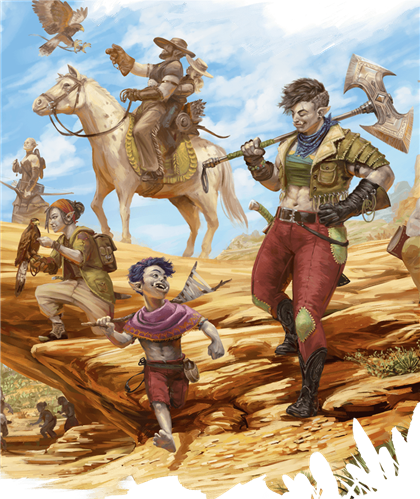
Today, the Orcs have become central characters in the legends of the Forgotten Realms, and provide much more variety than they did in their earlier years. They serve as archmages, kings, jesters, bandits, and even your party members. The Orcs are a far too often overlooked and underrated species, who have spent far too long away from the spotlight. So today, let’s celebrate the evolution of the Orc by taking a closer look at exactly how they earned their place at the top.
The Evolution of Orc Lore
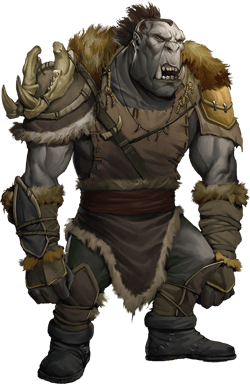
Orc lore, much like the nomadic nature of the species itself, has traveled a long road. A journey that took them from an existence as cursed, cave-dwelling monsters to a fully realized playable species with cultural roots that reach across the multiverse.
The story begins with the iconic figure, Gruumsh One-Eye, the all-father of the Orcs. After his rejection and expulsion from the pantheon of the other species’ Gods of Faerûn, Gruumsh decided he would take matters into his own hands. Retreating into the darkness, Gruumsh set to work molding his followers in his image; an image that was consumed with hate for the divine. This hate was mechanically reflected in the early Orcs as sunlight sensitivity and a strictly subterranean existence. For decades, this framing stuck, making Orcs a go-to as unthinking, unfeeling raiders, marauders, and villains: an always-evil species that existed primarily to fill dungeon encounters.
The Orc Turning Point
Eventually, that framing changed, and Orcs became central characters in the pantheon of playable species. But this wasn’t a change that happened overnight. In fact, the turning point for Orcs happened much more recently than one might expect.
In 2020, the release of Tasha’s Cauldron of Everything changed how we view all playable species in D&D. With Tasha’s Cauldron of Everything, Wizards of the Coast wanted to fully embrace the idea that there is no wrong way to play D&D, meaning any character background or personality type should be available to players. To establish this, Tasha’s Cauldron of Everything makes one thing clear: there is no such thing as an entirely “evil” species. Whether Drow or Orc, every species is made up of individuals, each of whom comes from different communities, backgrounds, and life experiences, meaning no species can be considered “evil” or “good”, as morality will differ from person to person. This change, while seemingly subtle, was the first step in freeing the Orcs from their past as default “enemies”.
Tasha’s Cauldron of Everything was only the first domino to fall. Not long after, the release of Mordenkainen Presents: Monsters of the Multiverse would set the stage for 2024’s PHB only a few years in advance. In 2022, Mordenkainen Presents: Monsters of the Multiverse included the Orc as one of the book’s many Fantastical Races, and in so doing, established the Orc as a prolific species whose impact can be felt across the multiverse, both as villains and as heroes and protectors (particularly within the world of Eberron, but the book makes it clear that Orcs exist in many forms throughout the multiverse).
Between Tasha’s Cauldron of Everything and Mordenkainen Presents: Monsters of the Multiverse, fans started to suspect that a fully standalone Orc species was on its way, and thankfully, with the release of the 2024 Player Handbook, their suspicions were confirmed.
The Establishment of The Orcs
The trajectory of the Orcs in-universe is not a clean and direct line from villainy to heroism. Instead, it’s more of a slow collection of events that gradually resulted in the perception of Orcs changing over time.
In earlier editions, Orcs essentially occupied the same space as goblins and trolls. Faceless, simple, and uniform. But with ensuing releases, Orcs were slowly divided into subcommunities: Gray Orcs, Mountain Orcs, Nomadic Orcs, etc. With each new community, more and more nuance was introduced into the equation as Orcs from different backgrounds slowly evolved to reflect different perspectives, mindsets, and values. Still, the Orcs were seen as minor tribal figures, codified as bone-crushing barbarians encountered on the other side of the battlefield.
Perhaps the major turning point for Orcs in the universe was the establishment of the first collected Orcish state: The Kingdom of Many Arrows.
The Kingdom of Many Arrows
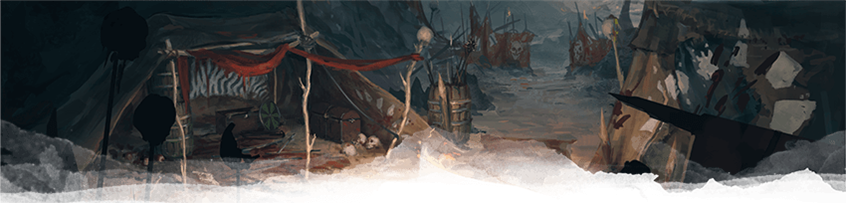
In 1372DR, Obould Many-Arrows founded a Kingdom in the north of Faerûn after uniting the many Orc tribes under his banner. This Kingdom would go on to become the ‘homeland’ of the Orcs who valued civilization and culture, establishing them as a people who belonged to a truly functioning society. According to most Orcs, the Kingdom of Many Arrows was crucial in improving the overall reputation of the Orcs across Faerûn.
Sadly, not long after the War of Silver Marches, the Kingdom of Many Arrows fell, and the Orcish citadel of Faerûn was destroyed. However, rumors have it that the city may return once more, under the leadership of King Orrusk Homebringer.
Orc Stat Blocks & Mechanics
Orcs provide one of the tightest mechanical packages of the many species of Faerûn, with traits that will benefit several builds and will easily help your character stand out on the battlefield.
- Ability Score Increases: +2 Strength and +1 Constitution.
- Adrenaline Rush: Replaces the old "Aggressive" trait. Orcs can take the Dash action as a bonus action several times equal to their proficiency bonus per long rest. Plus, each use temporarily increases their maximum hit points.
- Relentless Endurance: Once per long rest, when reduced to 0 hit points, an Orc drops to 1 HP instead, keeping them standing when it counts most.
- Darkvision: 60 feet of vision in dim light and darkness, a reliable utility trait across virtually every campaign environment.
Perhaps their most iconic trait is Adrenaline Rush. Where the “Aggressive” trait of earlier D&D simply moved the character towards their enemies, Adrenaline Rush rewards intentional positioning with bonus HP and movement speed. This trait allows the Orc to close gaps, reposition mid-combat, and squeeze extra efficiency from a single combat turn.
When combined with Relentless Endurance, Orcs become particularly difficult to topple, even at lower levels. Not only do they maneuver the battlefield with alacrity, but they also take a little more to actually fell. Taken together, these traits make Orcs statistically well-suited to Barbarians and Fighters, who benefit most from enhanced mobility and survivability.
What Roles Do Orcs Perform in a Modern Party?
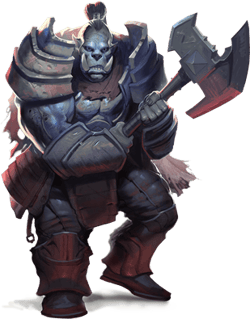
If you don’t know much about Orcs, you might write them off as a one-trick species. They seem to be the go-to pick if you want to play a species that smashes skulls and breaks knees, but Orcs in D&D are much more diverse than the Orcs of more traditional fantasy. In the Forgotten Realms, Orcs are spellcasters, assassins, knights, artisans, alchemists, and everything in between. The only thing that unites Orcs of various kinds is their generally “heartier” disposition in the form of a +2 Strength and +1 Constitution bonus.
As Melee Combatants
Leaning into the Orcs' ability bonus stats, the Fighter, Paladin, and Barbarian are a natural fit. These Orc builds will serve as natural tanks thanks to their Con bonus and Relentless Endurance feats, without missing out on raw melee damage thanks to their +2 to Strength.
As Striker Classes
Perhaps surprisingly to some, Orcs can serve as highly capable Rogues or Monks. Benefiting enormously from Adrenaline Rush, Orc Rogues/Monks can deploy hit-and-run tactics that allow them to reposition themselves on the battlefield while dealing out heavy-hitting damage.
As Spellcasters
Orcs are a great choice to pick when you’re trying to improve the survivability of an otherwise scrawny spellcaster. With their advanced mobility, Relentless Endurance, and bonuses to Strength and Con, an Orc Wizard or Sorcerer will excel at staying up no matter what, whether that means bonking enemies on the head with their staff, repositioning themselves to avoid danger, or staying conscious just long enough to cast a game-changing spell.
Roleplaying an Orc
.png?width=208&height=208&name=max%20(74).png) Beyond combat, Orcs shine just as brightly in party dynamics. Thanks to their origins and misunderstood past, the “theme” of most Orc characters is “defying expectations”. Orcs are great to roleplay as characters with hidden layers that contrast their harsh exterior. A tribal champion turned diplomat, a war veteran turned scholar, or a gentle-hearted bard who dominates a recreational wrestling league on the weekends.
Beyond combat, Orcs shine just as brightly in party dynamics. Thanks to their origins and misunderstood past, the “theme” of most Orc characters is “defying expectations”. Orcs are great to roleplay as characters with hidden layers that contrast their harsh exterior. A tribal champion turned diplomat, a war veteran turned scholar, or a gentle-hearted bard who dominates a recreational wrestling league on the weekends.
Bringing Your Orc to Life on the Virtual Tabletop
Roll20's Character Builder makes translating the updated Orc species from rulebook to digital sheet seamless.
Open the Roll20 Character Builder, select Orc from the species list, and the sheet automatically populates your core traits. From there, Roll20’s automated character sheets will help you keep track of your spell slots, HP, and everything in between.
Once your sheet is set, build out the visual side of your campaign. The Roll20 Marketplace offers Orc-themed tokens, battle maps, and handouts that bring Gruumsh's legacy to the table without hours of custom prep. For GMs running a full campaign, integrating an official rulebook like Monsters of the Multiverse or even just the D&D 2024 Player's Handbook into your VTT ensures every Orc stat block and lore entry is a click away.
Ready to roll your first Orc? Get started with Roll20’s character builder and build your Orc today.